
Mobile App Development Company: Build iOS & Android Apps That Users Love
Your product deserves a mobile presence that works flawlessly — across every device, every platform, every time
Published at: October 15, 2026
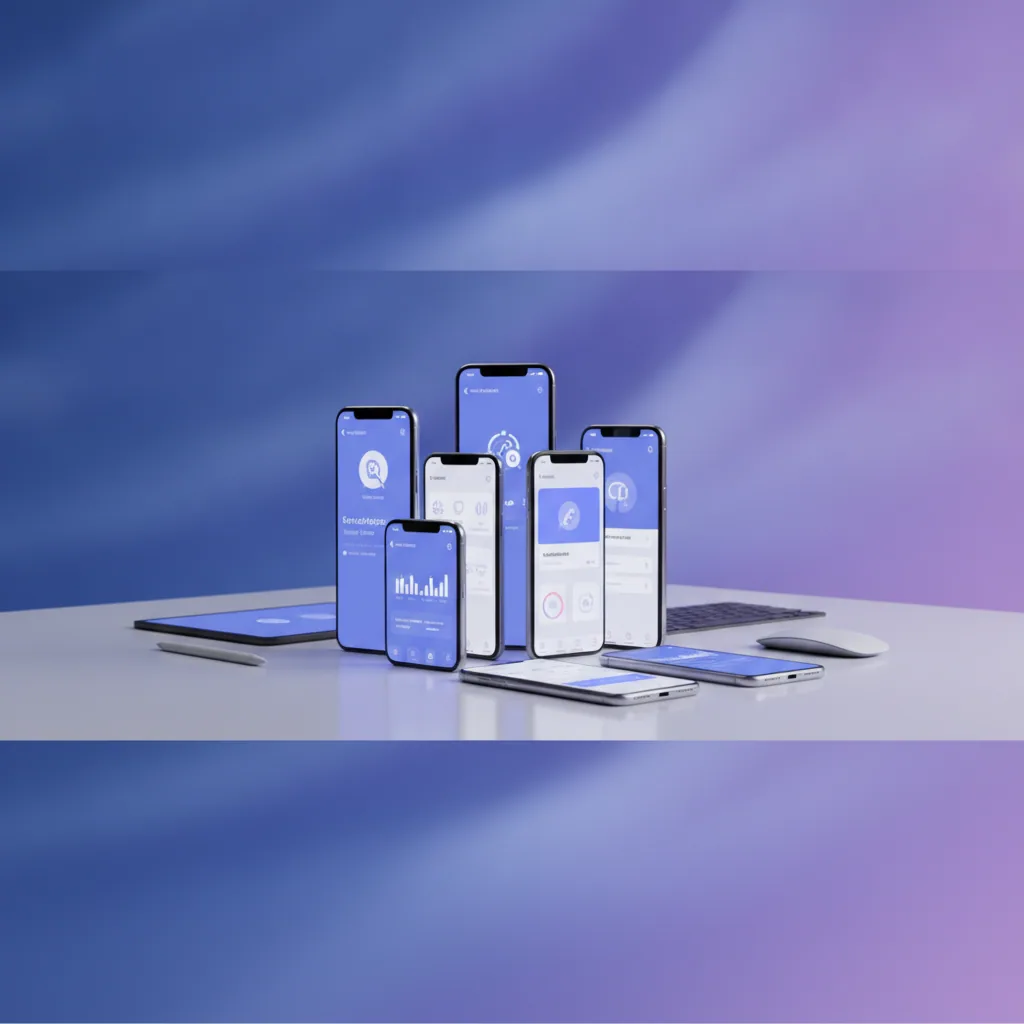
Why Your Business Needs a Trusted Mobile App Development Company
In 2026, mobile isn't optional — it's the primary touchpoint for most users. Whether you're building a customer-facing app, an internal operations tool, or a full SaaS product with mobile access, choosing the right mobile app development company determines whether your product launches fast, runs reliably, and actually drives business outcomes.
At UIDB, we've spent a decade building mobile apps across iOS, Android, and cross-platform frameworks for startups, SaaS companies, and enterprise clients across Israel, the UK, and the US. This guide covers what to look for in a mobile development partner, which technology to choose, and how to avoid the mistakes that cost businesses months of rebuilds.
Native vs. Cross-Platform: The Real Trade-Offs in 2026
The native-vs-cross-platform debate has largely been settled in recent years. Here's the honest breakdown:
React Native: The Default Choice for Most Products
React Native remains the leading cross-platform framework for business apps in 2026. A single TypeScript codebase delivers near-native performance on both iOS and Android, and the ecosystem has matured enormously. If your app is data-driven, user-facing, or needs rapid iteration, React Native is typically the best balance of speed, quality, and cost.
UIDB has built React Native apps for fintech, logistics, field operations, and SaaS products. Our experience: React Native handles 95% of use cases beautifully — the remaining 5% (deep hardware access, advanced graphics, background processing) is where native becomes worth the investment.
Flutter: When You Need Pixel-Perfect Design
Flutter's rendering engine gives you complete control over every pixel — making it the right choice when brand-perfect UI is a hard requirement or when you're targeting both mobile and web from a single codebase. Flutter apps look identical across platforms, which matters for consumer products where design differentiation is a competitive advantage.
Native iOS (Swift) and Android (Kotlin)
Native development delivers maximum performance and deepest platform integration. Choose native when your app uses Bluetooth, advanced camera processing, ARKit/ARCore, NFC, or other hardware-intensive features — or when you're building on an existing native codebase. UIDB engineers are proficient in Swift, SwiftUI, Kotlin, and Jetpack Compose for fully native builds.
What Sets Great Mobile Apps Apart
Having reviewed and taken over dozens of mobile products that needed rescuing, we've identified what separates apps users love from apps users abandon:
- Intentional UX architecture — Every screen must be designed around a clear user job-to-be-done. Beautiful UI on top of poor information architecture still fails.
- Performance from day one — Apps that launch in 1.5 seconds convert better than apps that launch in 3. Performance budgets must be established at architecture stage, not added as an afterthought.
- Offline-first thinking — Mobile users lose connectivity. Apps that handle this gracefully retain users; apps that crash or corrupt data lose them permanently.
- Deep OS integration — Push notifications, widgets, Siri/Google Assistant shortcuts, and share extensions extend your app's surface area. Most teams skip these; they shouldn't.
- Maintainability — The team that builds version 1.0 often isn't the team that maintains version 3.0. Clean architecture, typed APIs, and test coverage determine whether future enhancements are weeks or months of work.
The UIDB Mobile App Development Process
We don't just execute a specification — we act as a technology partner invested in your product's long-term success. Here's how we work:
Phase 1: Discovery and Architecture (2-3 weeks)
We map your users, their jobs, and your technical constraints. We define the platform strategy (React Native vs native), back-end API requirements, authentication approach, and data architecture. You receive a technical specification document and a realistic timeline before development starts.
Phase 2: UX and Prototype (2-4 weeks)
Wire-frames evolve into interactive prototypes. We validate navigation, flows, and key interactions before committing to full-stack development. Our designers work in Figma and hand off pixel-perfect assets with a component library.
Phase 3: Full-Stack Development (8-20 weeks depending on scope)
Front-end and back-end develop in parallel. Our React Native or native engineers build the mobile app while our back-end team delivers the APIs. Bi-weekly demos keep you informed and allow direction adjustments before they become expensive.
Phase 4: QA, App Store Submission and Launch
We run manual and automated testing across device families. We handle App Store and Google Play submission, including screenshot creation, metadata, and review guidelines compliance.
Phase 5: Long-Term Maintenance and Iteration
Most of our clients continue with us after launch. We provide ongoing development, OS update compatibility, crash monitoring, and feature iterations based on real usage data. This is where UIDB's boutique model delivers the most value: you have a senior team that knows your codebase deeply, not a rotating cast of contractors.
How to Evaluate a Mobile App Development Company
Before signing any contract, ask these questions:
- Who will actually write my code? Many agencies sell senior engineers and deliver juniors. Insist on meeting the team, reviewing their GitHub, or seeing past work in production.
- What is your post-launch support model? App development does not end at launch. OS updates, new device screen sizes, API deprecations, and security patches all require ongoing attention.
- Do you own the IP and source code? You must own 100% of the code from day one. Any contract that grants the developer ongoing IP rights or creates lock-in should be rejected.
- Can you show me apps in production with similar complexity? Portfolio screenshots do not prove engineering quality. Ask to download and use real apps they have built.
- What is your testing strategy? A professional mobile team will describe their device testing matrix, crash reporting tools, and CI/CD pipeline.
Common Mobile App Development Mistakes
These are the scenarios we are most often called in to fix:
- Choosing the wrong framework — A consumer app rebuilt from a web-focused framework now suffering from janky animations and poor performance.
- No API-first design — Mobile and back-end developed in silos, leading to months of integration work after both are done.
- Underestimating App Store compliance — Apple's review process can take 5-10 business days and may require code changes. Building time for this is non-negotiable.
- No analytics from day one — Without instrumentation from the start, you have no data to drive iteration.
Mobile App Development Services at UIDB
Our mobile development practice covers iOS app development (Swift, SwiftUI), Android app development (Kotlin, Jetpack Compose), React Native cross-platform development, Flutter cross-platform development, Apache Cordova and Capacitor hybrid apps, mobile UX/UI design, App Store and Google Play submission, and long-term maintenance.
We serve SaaS companies adding mobile access to existing web products, startups building mobile-first products, and enterprises modernizing legacy mobile applications. Explore our success stories to see real-world results, or visit our services page for the full picture.
iOS and Android App Development: One Partner, Both Platforms
Most businesses searching for iOS and Android app development face the same question: build two native apps, or one cross-platform codebase? UIDB delivers both models under one roof, so you get a single team of senior engineers handling iOS and Android development end-to-end, instead of coordinating two separate vendors or in-house squads.
Our iOS and Android app development services cover:
- Native iOS development — Swift and SwiftUI apps built for the App Store, optimized for performance and Apple's design guidelines.
- Native Android development — Kotlin and Jetpack Compose apps built for Google Play, tuned for the fragmented Android device landscape.
- Cross-platform iOS & Android development — a single React Native or Flutter codebase that ships to both stores from day one, cutting build time and long-term maintenance cost.
- Android-to-iOS and iOS-to-Android porting — if you already have one platform live and need to bring the app to the other, we audit the existing codebase and scope the fastest path to feature parity.
iOS and Android App Development FAQ
Do you build native apps or cross-platform apps for iOS and Android?
Both. We recommend cross-platform (React Native or Flutter) for most business apps, and native Swift/Kotlin when the app needs deep hardware access, AR, or platform-specific performance. We'll tell you honestly which fits your product, rather than defaulting to whichever we prefer to build.
Can one team really handle both iOS and Android development?
Yes — that's the point of hiring a dedicated iOS and Android app development company instead of splitting the work across freelancers. One team means one architecture, one API contract, and one release process for both platforms.
How long does iOS and Android app development take?
A focused MVP typically takes 8-14 weeks for both platforms when built cross-platform; native builds for both stores usually add 30-50% more time since UI and business logic are implemented twice.
Do you handle App Store and Google Play submission?
Yes — we manage the full submission process for both stores, including compliance review, screenshots, and store listing optimization.
Ready to Build Your Mobile App?
Whether you have a detailed specification or just a rough idea, our team can help you define the right scope, choose the right technology, and build something your users will actually use.
 Tags:
Tags:
- mobile app development
- iOS development
- Android development
- React Native
- Flutter
- cross-platform apps
- ios and android app development
- ios app development services
- android app development services


Need expert advice?
We'd love to hear about your challenge and propose a tailored solution.
Let's Talk
Leave a comment