

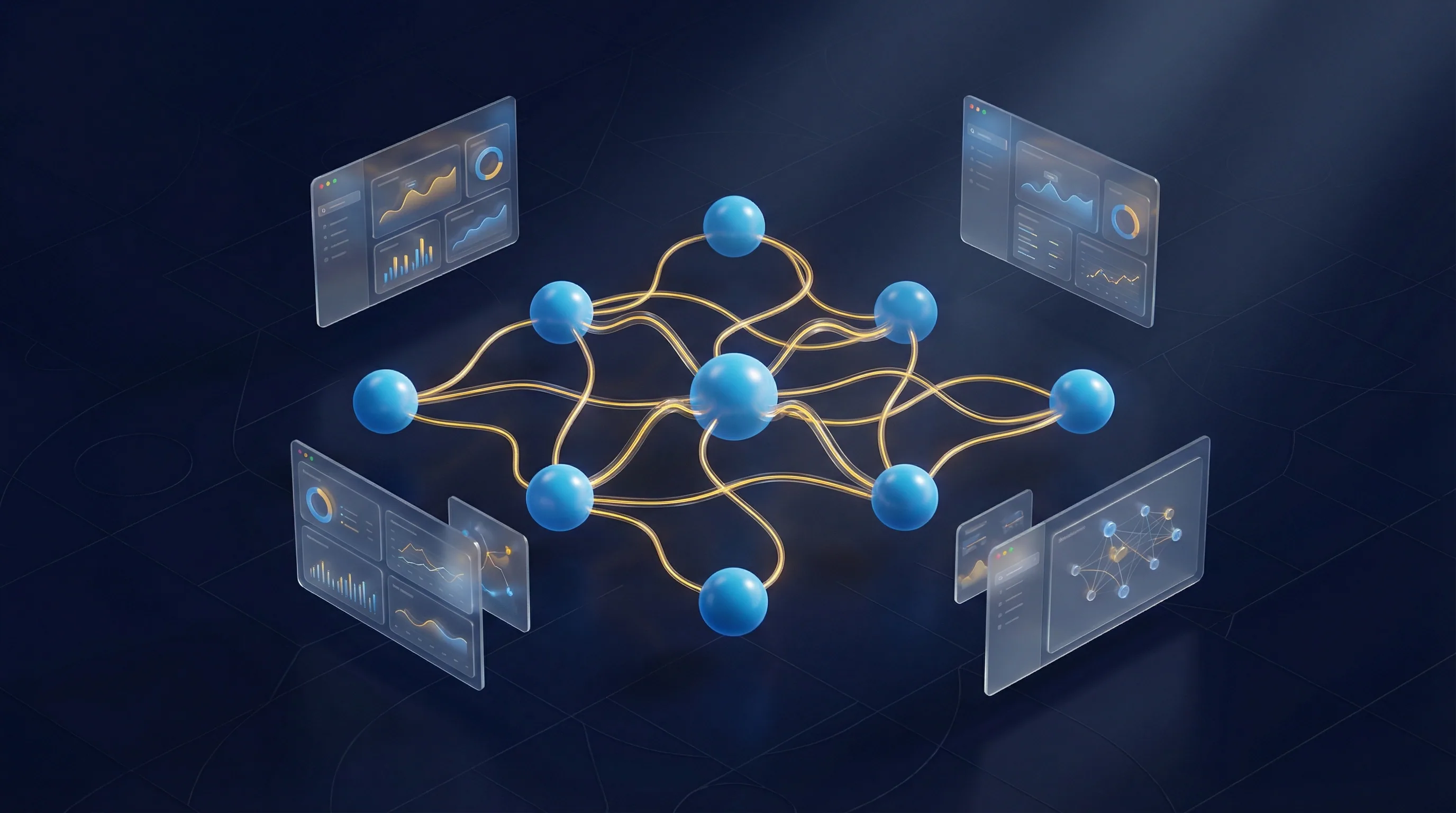
Building a SaaS (Software as a Service) system is one of the most complex challenges in software development. Unlike a regular application, a SaaS system needs to serve hundreds or thousands of customers simultaneously, manage subscriptions and billing, and handle ongoing security and scaling requirements.
In this guide, we'll cover the critical stages of SaaS development — from initial architecture decisions to scaling challenges and ongoing maintenance.
Multi-tenancy: The First Architectural Decision
The first and most important decision in SaaS development is choosing the multi-tenancy model — how the system separates different customers.
Three Main Models:
- Database per Tenant — each customer gets a separate database. Most secure, but more expensive to maintain
- Schema per Tenant — one database with separate schemas per customer. Good compromise between security and cost
- Shared Database — shared database with tenant_id in every table. Most cost-effective, requires careful permission planning
The choice depends on security requirements, customer size, and budget. Most mid-sized SaaS systems use Shared Database with Row-Level Security.
Cloud Infrastructure: AWS, Azure, or GCP?
Choosing a cloud provider is a long-term decision. Here's what to consider:
- AWS — the most popular choice for SaaS. Massive service variety, excellent Serverless support (Lambda, DynamoDB, SQS)
- Azure — excellent for Microsoft ecosystem integration. Popular in Enterprise
- GCP — strong in Data and AI. Excellent for heavy ML requirements
In practice, AWS leads the SaaS market with dedicated services like AWS SaaS Factory and Amazon Cognito for Authentication.
Essential Infrastructure Components:
- Authentication & Authorization — Cognito / Auth0 / Custom JWT
- API Gateway — Rate Limiting, Authentication, and Routing management
- Queue System — SQS / RabbitMQ for async processing
- CDN — CloudFront for serving Static Assets
- Monitoring — CloudWatch / Datadog / New Relic
Security: No Compromises
A SaaS system holding data for hundreds of customers must be secured at the highest level:
- Data Encryption — At Rest (AES-256) and In Transit (TLS 1.3)
- Row-Level Security — one customer should never see another customer's data
- RBAC — Role-Based Access Control at the Tenant level
- Audit Logs — complete logging of every critical action
- SOC 2 / ISO 27001 — standards that Enterprise customers require
- Penetration Testing — periodic security assessments
Billing and Subscription Management
The billing system is the financial heart of every SaaS product. Key considerations:
- Subscription Management — plans, upgrades, downgrades, cancellations
- Usage-Based Billing — charging by usage (API calls, storage, users)
- Payment Processing — Stripe / Paddle for global payments
- Invoicing — automatic invoice generation with tax compliance
- Trial Management — managing trial periods and conversion
CI/CD and DevOps: Continuous Deployment
A SaaS system requires a reliable pipeline enabling fast and safe deployments:
- Infrastructure as Code — Terraform / CloudFormation / CDK
- CI/CD Pipeline — GitHub Actions / GitLab CI / Jenkins
- Automated Testing — Unit, Integration, E2E
- Blue-Green / Canary Deployments — zero-downtime releases
- Feature Flags — gradual feature rollout to specific customers
Scale: From 100 to 100,000 Users
Scaling isn't just "adding more servers." It's an architectural mindset that starts from day one:
- Horizontal Scaling — Kubernetes / ECS for container management
- Database Optimization — Read Replicas, Caching (Redis/ElastiCache), Connection Pooling
- Async Processing — offloading heavy tasks to queues
- CDN and Edge Computing — fast delivery from anywhere in the world
- Performance Monitoring — identifying bottlenecks before they become problems
Summary
Building a successful SaaS system requires careful upfront planning, solid architecture, and deep understanding of scaling and security requirements. This isn't a project for a "website builder" — it requires an experienced software development company that understands complex systems.
Investing in the right architecture from the start saves months of rewrites and millions in operational costs.
Have a SaaS product that needs development or upgrading?
We'd love to hear about your technology challenge.
Let's Talk Tags:
Tags:

Leave a comment