

A Guide to Building a Comprehensive PRD for App Development
Published at: October 21, 2026
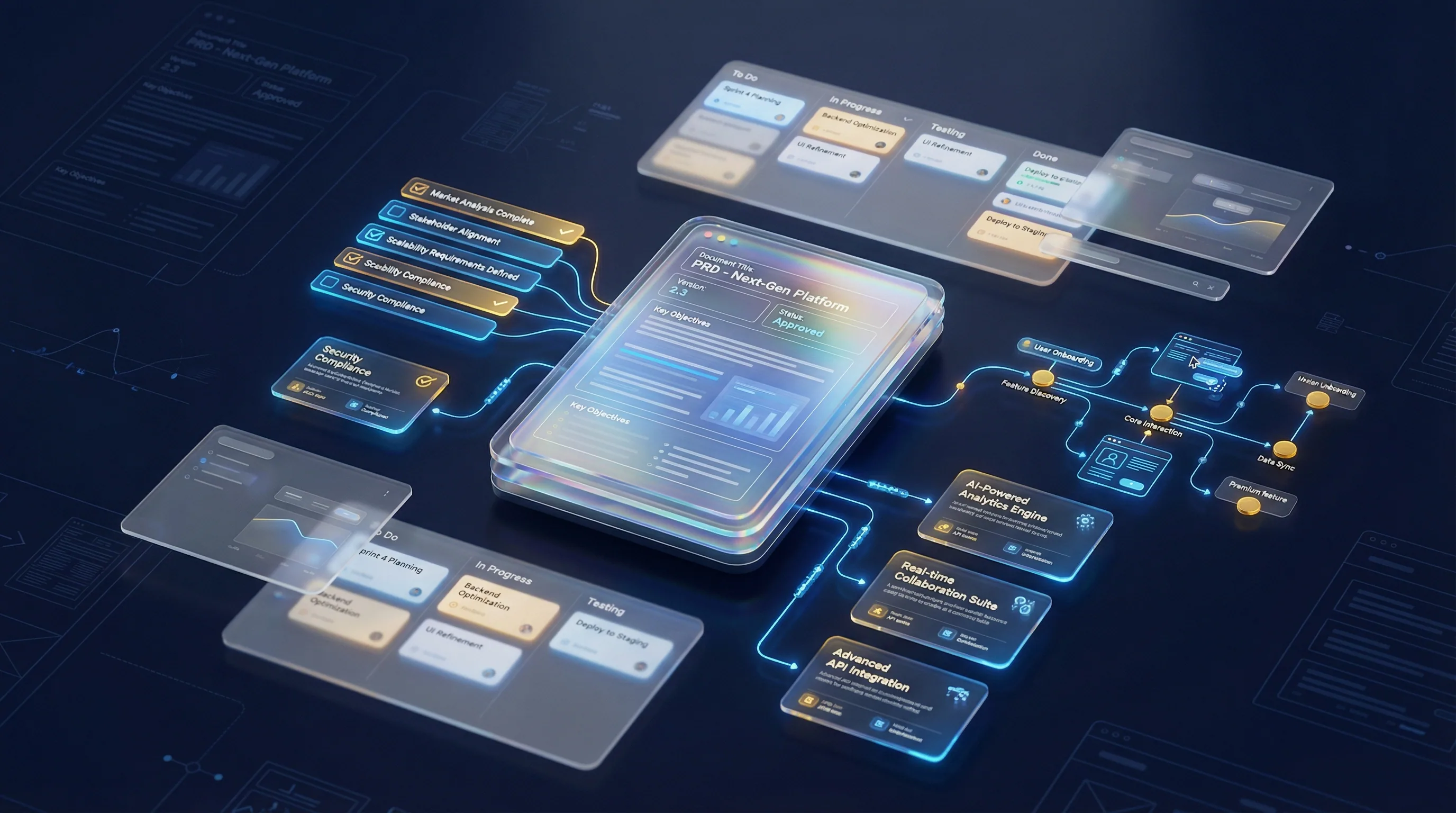
A comprehensive Product Requirements Document (PRD) is the cornerstone of any successful app development project. It outlines key aspects of app development, including the nice-to-have features versus the required functionality, the usability requirements, design or interface needs, an overall product overview, data specifications, and support expectations. A well-crafted PRD addresses these fundamental aspects of the project. It’s these aspects that we’ll be addressing in this article:
1. Outlining the High-Level Goals of the App Development Project
2. Defining The System’s Function and the Problem It Solves
3. Key Functional and Technical Requirements for the App
4. Defining User Roles and Access Levels in Your App
5. Visual Representation of App Layout and Navigation
6. Establishing a Common Language for Effective Communication Throughout the Development
7. Establishing Goals and Metrics for the App’s Success
8. Conducting Market Research of the Competitive Landscape
9. The Necessary Tools for Implementation
10. Validating App Functionality and User Feedback with Prototypes
Once you’ve got the details of these elements in place, you have a great formula for starting the development process. It’s a matter of optimizing each development process by applying these principles and techniques. So let’s dive in and discuss them:
Outlining the High-Level Goals of the App Development Project
The Product Requirements Document (PRD) serves as the cornerstone for aligning all stakeholders in an app development project and is essential to make sure that your project stays on budget and on track. It provides a clear roadmap by outlining the app’s purpose, goals, and core functionalities, ensuring that everyone involved—from developers to business leaders—operates with a shared understanding. A well-crafted PRD reduces ambiguity, streamlines communication, and minimizes the risk of misaligned priorities, saving time and resources throughout the development lifecycle.
At its core, the app development project aims to address a specific problem, fulfill unmet market needs, or capitalize on a unique business opportunity. By defining the specific objectives within the PRD, the team can focus on delivering tangible value to both users and business goals.


Defining The System’s Function and the Problem It Solves
The system description defines the scope of the project by setting clear boundaries on what the app will and won’t include. This helps prevent feature creep and ensures that the project remains focused on delivering the most critical functionalities. By outlining these parameters, the PRD provides a solid framework for development, aligning expectations and streamlining the design and implementation process.
When developing an application, it’s essential to clearly define its purpose and the problems it will solve. It’s not just about creating a cool product, it’s about having clarity on addressing specific pain points in your business, improving efficiency, and ultimately driving revenue.
We begin by outlining your app’s primary and secondary functions and the problems it aims to solve. We then highlight the specific challenges your business or industry currently faces and explain how the app will address these issues.
Key Functional and Technical Requirements for the App
The functional and technical requirements section of a Product Requirements Document (PRD) outlines the essential specifications needed to bring an app to life. This includes a detailed breakdown of the app’s core features, the expected user experience, inputs, and outputs while ensuring they align with user needs, integrations, and business objectives. Additionally, this section should specify the platform requirements—whether the app will be built for iOS, Android, or as a web app. Choosing the right platform ensures the app is tailored for the appropriate audience.
Scalability is another important component of development, addressing the app’s ability to handle current & future growth and increasing user demand. Special attention should be given to security, ensuring that the app complies with data protection standards while preventing unauthorized access. These considerations help create a secure, user-friendly environment while also adhering to compliance requirements. By documenting these requirements, the PRD sets the stage for a functional, adaptable product that is both cost-effective and ready for long-term success.
This detailed explanation ensures that all stakeholders have a clear understanding of how the app will function and what it aims to achieve. Determining the specific actions users can perform within the app and the expected outcomes of those actions is essential, making it easier for developers to align their work with user needs.


Defining User Roles and Access Levels in Your App
As part of the PRD, it’s crucial to clearly define the primary user personas and their respective roles and map out which feature is applicable to which role, within the app. This helps ensure the app is tailored to meet the needs of its different audiences. User personas might include administrators, standard users, and guest users, each with distinct roles and responsibilities. By identifying these personas early on, you can better structure the app’s features and workflows to suit their specific needs and expectations.
Visual Representation of App Layout and Navigation
Wireframes serve as the visual blueprint for the app’s user interface, providing a clear and structured representation of its layout and design. These visual tools focus on key components such as navigation paths, UI elements, and the overall flow, giving stakeholders a tangible understanding of how users will interact with the app. Wireframes help in visualizing the app’s design before development begins, ensuring that all essential elements are accounted for.
Beyond just design, wireframes play a crucial role in aligning stakeholders and ensuring that everyone involved in the project shares the same vision for the user experience. They allow teams to identify potential issues early in the process, such as navigation challenges or usability concerns, helping to refine the design and optimize the app’s functionality. By catching problems early, wireframes contribute to a smoother development process and a more intuitive final product.
Establishing a Common Language for Effective Communication Throughout the Development
Clear communication among project stakeholders relies on creating a shared vocabulary. Establishing a glossary of key terms and acronyms in the PRD helps everyone involved, from developers to business leaders, understand the language being used and reduces the risk of misunderstandings. This glossary should include technical jargon, business-specific language, and any app-specific terms that are relevant to the project.
By defining these terms upfront, you eliminate ambiguities that could lead to confusion or misinterpretation. A common language ensures that everyone is on the same page and working toward the same goals, making collaboration smoother and more efficient. This shared understanding is critical for the project’s success, as it helps align expectations and supports better decision-making throughout the development process.
Establishing Goals and Metrics for the App’s Success
Defining the system’s main objectives is critical for guiding development teams and ensuring alignment with both business and user needs. The business objectives should state how the app will contribute to achieving broader goals, such as increasing revenue, improving operational efficiency, or enhancing customer satisfaction. By clarifying these goals, the development team can prioritize features that directly support business growth and success.
Equally important are the user objectives, which focus on how the app will address specific user pain points and deliver value. Detailing how the app enhances the user experience helps ensure that the final product meets user needs and expectations. Additionally, the PRD should define what constitutes successful app usage, including key performance indicators (KPIs) and metrics to evaluate its effectiveness. These metrics provide a clear framework for assessing the app’s performance and ability to deliver on both business and user objectives.
Conducting Market Research of the Competitive Landscape
Conducting market research on existing competitors is essential for understanding the landscape and identifying opportunities for differentiation.
By analyzing competitors’ apps, you can pinpoint their strengths, weaknesses, and any gaps in the market that your app can address. This research helps uncover opportunities to innovate and informs decisions on how to position the app uniquely within the market.
Competitive analysis insights are invaluable for guiding the feature prioritization and design process. Understanding what features competitors offer and where they fall short allows you to focus on providing unique value propositions that cater to unmet user needs. By leveraging these insights, the PRD can outline how your app will stand apart from the competition, ensuring it delivers a distinctive and compelling user experience.
Additionally, consider the limitations of existing tools or methods—maybe they’re not cost-effective or lack the necessary integrations. By positioning your product as a solution to these gaps, you make a strong case for its necessity, ensuring that both the development team and business stakeholders are aligned. This will help keep your project on budget while focusing on delivering an app that enhances your business and contributes to your growth.
The Necessary Tools for Implementation
When writing a PRD, it’s important to list the tools, frameworks, and platforms necessary for developing the app. This includes specifying the technology stack, software tools, and third-party integrations that will be used throughout the development lifecycle. By highlighting the tools that directly address project challenges or streamline the development process, teams can ensure they are equipped with the right resources to meet project goals efficiently.
Additionally, the PRD should consider tools for testing, project management, and collaboration to facilitate smooth communication and workflow management. This ensures seamless quality control, task tracking, and team collaboration. By clearly outlining the necessary tools in the PRD, you set the stage for a more organized and efficient development process, helping to prevent delays and resource gaps during implementation.
Validating App Functionality and User Feedback with Prototypes
A prototype serves as a dynamic, interactive version of the app’s wireframes, offering a more tangible demonstration of its functionality. Unlike static wireframes, prototypes allow users to interact with the interface, simulating real-world usage. This early-stage model is crucial for gathering user feedback and refining ideas before committing to full-scale development, ensuring that the app’s design and functionality align with user needs.
One of the key benefits of using a prototype is the ability to validate workflows and user interactions before development progresses further. By testing these elements with actual users, teams can identify usability issues and make adjustments in a cost-effective manner. Prototypes help save time and resources by addressing potential problems early, reducing the risk of costly revisions later in the development process.
Conclusion
These elements create a streamlined, cost-effective process and approach to app development, helping minimize expenses while building new products. Read here about reducing the cost of app development in our next article.
 Tags:
Tags:


Need expert advice?
We'd love to hear about your challenge and propose a tailored solution.
Let's Talk
Leave a comment